PDF version of this report is available here: PDF version
Back to top: Report on the Review of Panels and Visitor Paths at the Site
Intoduction
I would like, through this report, to draw attention to the general condition of the information panels and visitor Paths at the site, as well as to the condition of the mudbrick waste containers that I previously constructed.
Regarding the panels, some may wonder why I have repeatedly stated in previous reports that the panels remain in good condition. I would like to clarify that, since assuming responsibility for supervising the work, my primary focus has been on preserving the existing panels and maintaining the current situation, while keeping in mind the long-term goal of improving them and restoring them, as much as possible, to the condition they were in before 2011. My inspections have always focused on a number of key questions: Are any pages missing compared to the previous visit? Is the paint still holding up well? Are there any structural damages or breaks in the panels or their supports? Throughout this period, the answer to these questions was generally negative.
The initial objective was to preserve the existing state of the panels until a comprehensive review could be carried out. This process took longer than expected, as it required returning to the UGR to verify information and make the necessary comparisons. It is also important to note that repeated work interruptions since I assumed responsibility, together with unfavorable weather conditions, were among the main factors that delayed the completion of this task or, at least, prevented me from presenting my full assessment earlier.
On several occasions while at Tell Mozan, I also had to inquire about the fate of panels that had existed in the past. One notable example is the large welcome panel that used to stand at the foot of the mound, at the beginning of the road leading up to the site. Unfortunately, I was unable to locate it or determine what happened to it. Searches conducted at the mission house also yielded no results.
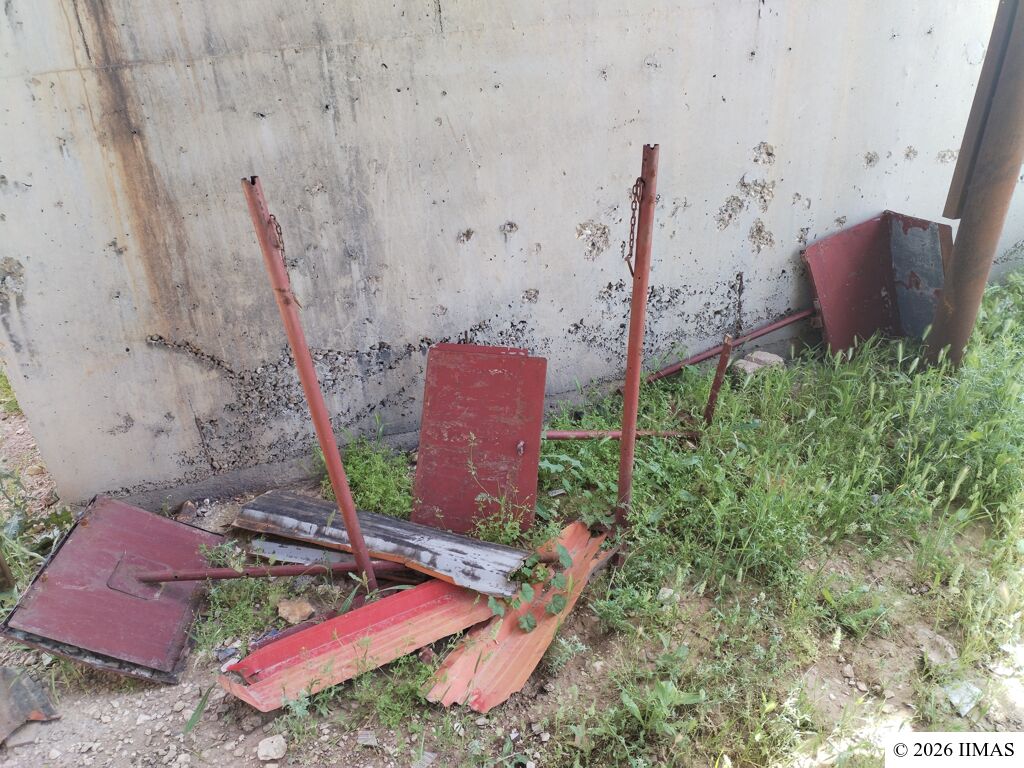
On the other hand, I was able to locate three panels “with cover”. However, they are in poor condition and require renovation of their display boards. I also found three panels “without cover” that remain in relatively good condition and could be reused after some basic cleaning. Following the review and comparison process, a number of discrepancies became apparent between what is documented on UGR and what actually exists on the site. Some panels and pages are available on UGR but are not present on the mound, while some panels currently found on-site have no corresponding documentation on UGR. The following observations are presented according to the order used in the Stations section of UGR.
|
|
Back to top: Report on the Review of Panels and Visitor Paths at the Site
Evaluation of Panel Condition and Proposed Solutions
The material currently used in the manufacture of these panels does not withstand welding if broken, making repairs extremely difficult, if not impossible, in some cases. Although previous attempts were made by a blacksmith to repair several damaged panels, the results were unsatisfactory. These repairs were carried out by a blacksmith from Umm al-Rabi’ village, whose workshop appears relatively limited compared to those available in Amuda or Qamishli. For this reason, I think it would be more effective to work with a blacksmith in Qamishli, where I could transport damaged panels for repair or fabrication and bring them back to Tell Mozan afterward.
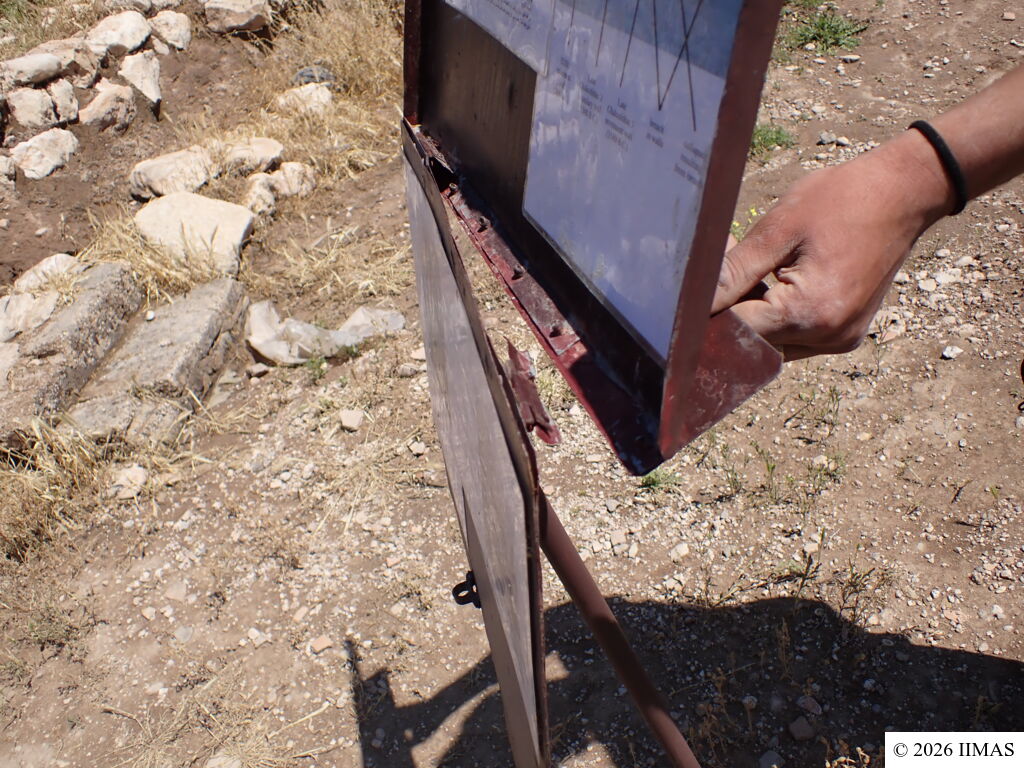
The panels consist of two main components: a metal support and a display board. Inspection revealed that the majority of the supports remain in good condition and can continue to be used, which would significantly reduce costs. The primary problem lies with some of the display boards, several of which have deteriorated beyond repair. I therefore recommend replacing these display boards with new ones made from a stronger material that can be welded and repaired in the future if necessary.
One example is the panel in Area J5, which has suffered damage that makes repair impractical. There are also several panels that tilt excessively backward when opened, making them difficult to read and reducing their effectiveness as interpretive displays. These panels should likewise be replaced.
|
|
Based on the current assessment, only four panels require replacement. The remaining panels are still in good condition and can continue to be used with periodic maintenance and repainting. Nevertheless, some of them may eventually require similar replacement if they suffer further damage.
A positive aspect is that most of the metal supports remain in good condition, making their replacement unnecessary. For example, the four panels that require renewal all have serviceable supports, meaning that only the upper display boards need to be replaced.
As for the panels with “covers” mentioned earlier and subsequently found in storage, I think that if they are to be reused within the site’s interpretive system, only their display boards will need replacement, while the existing supports can be retained because they remain structurally sound.
Based on the above, I think that we currently need to renew seven panels with covers (those containing more than two A4 pages), unless the reactivation of some visitor paths in the Stations section requires the creation of additional panels.
Back to top: Report on the Review of Panels and Visitor Paths at the Site
Visitor Paths
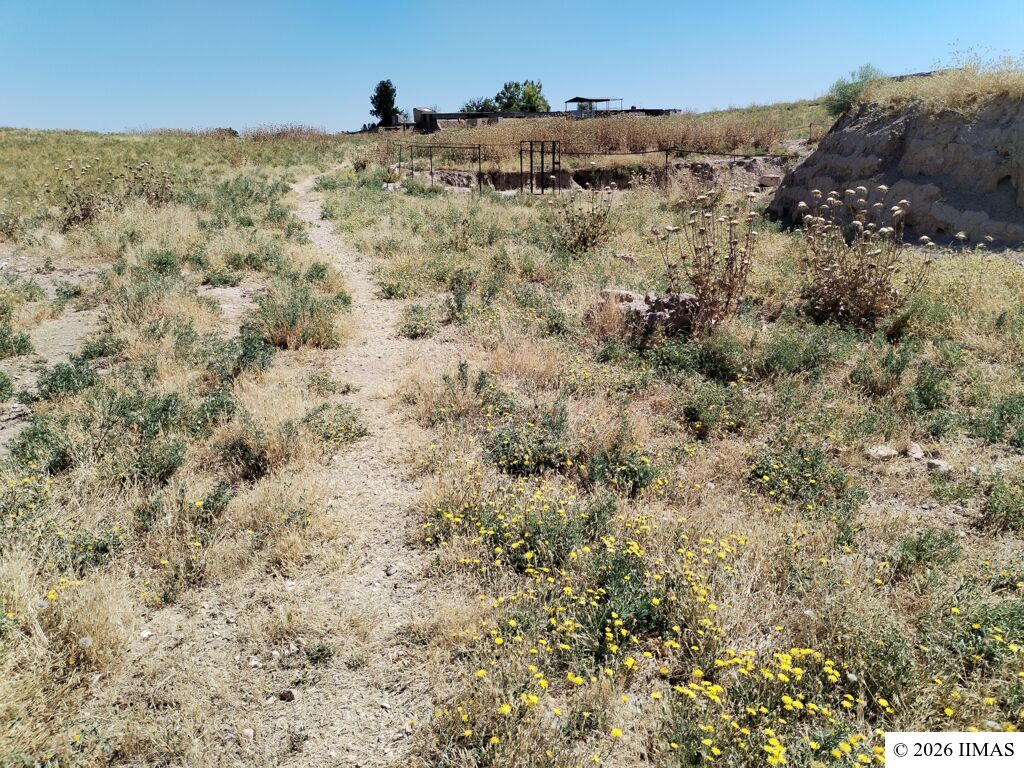
Some visitor paths have become less visible due to the loss of part of the crushedstone surface that originally covered them, as well as the accumulation of vegetation. The current plan is to remove weeds, soil, and debris from these paths and then redistribute and level the crushed stone. If it becomes apparent that additional material is required, we may need to bring more crushed stone to the site. I do not expect the quantity needed to exceed approximately two cubic meters.
|
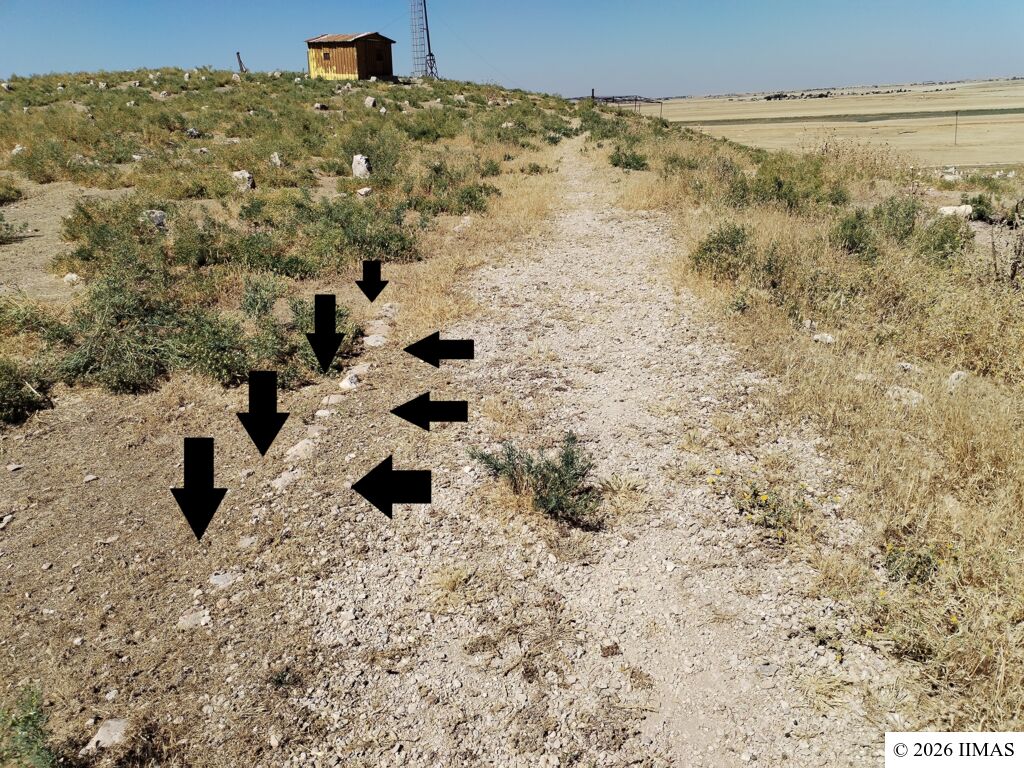
After cleaning and resurfacing the paths, small stones will be placed along both sides of the paths, as was done previously, and secured with mud to prevent the crushed stone from spreading beyond the path boundaries. However, this treatment will require periodic maintenance, as weather conditions and visitor traffic may necessitate the repositioning of stones and repair of damaged mud sections.
|
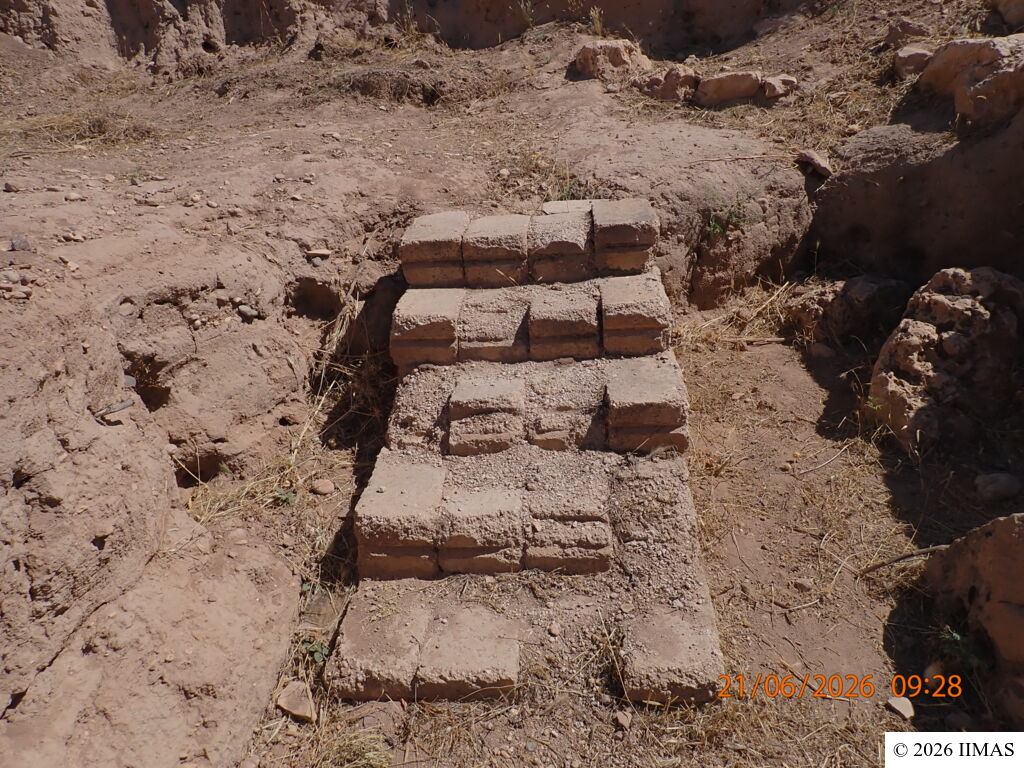
As noted in previous monthly reports, several of the cement blocks used as steps within excavation areas have deteriorated significantly and, in some cases, have become almost unusable. These damaged blocks should therefore be replaced. It may be possible to reuse some blocks currently scattered around the site, particularly those located near the mission house. According to preliminary estimates, no more than 25 cement blocks should be required.
|
|
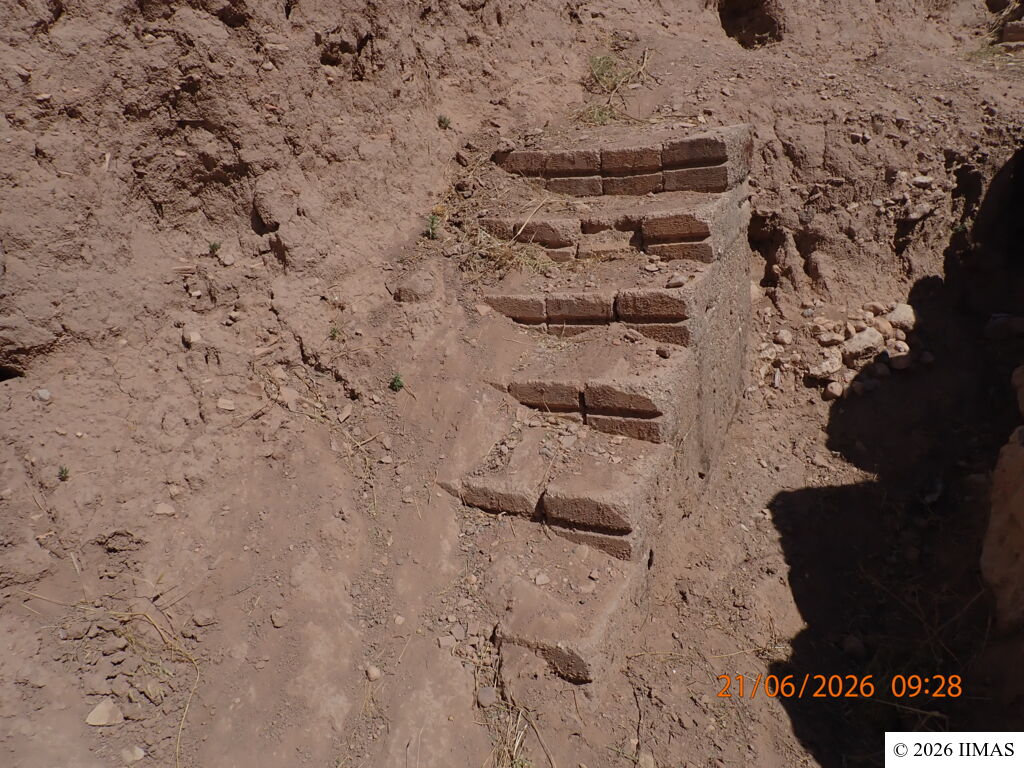
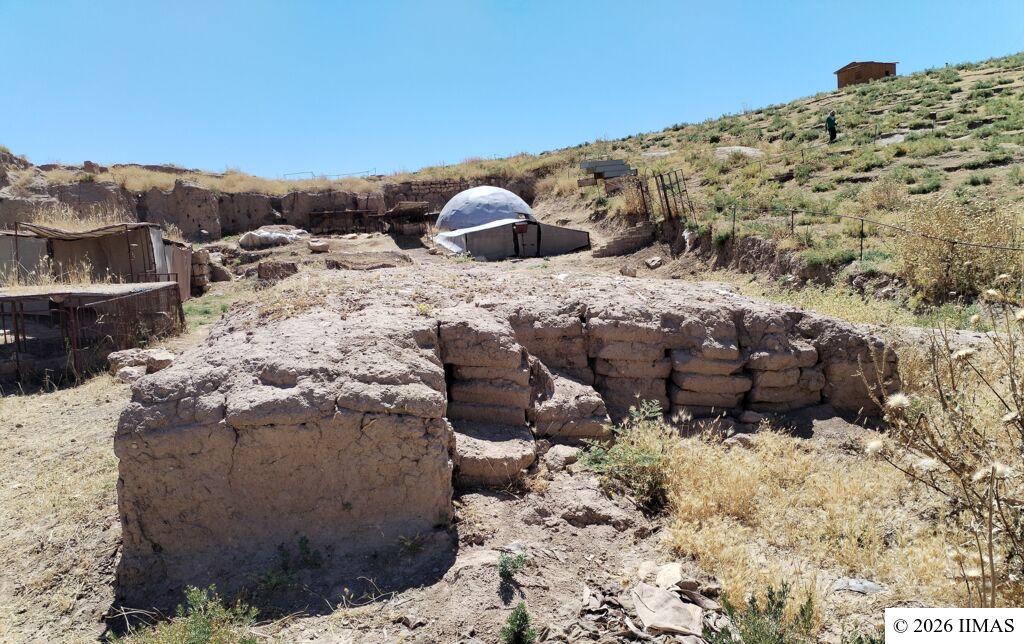
The staircase in Area J5, which has been buried by soil due to the collapse of the section opposite the retaining wall, will be cleaned, rehabilitated, and repaired where necessary. The main issue, however, is the accumulation of soil resulting from previous collapses. In my opinion, this soil could be placed in burlap bags and used as additional support for the section. This approach may help stabilize the area and reduce the likelihood of future collapses. I would be interested in hearing your opinion on this proposal.
| |
I fully realize that substantial amounts of soil have accumulated within the excavation areas over the years, and it may not be feasible at present to restore the overall appearance of the site to its pre-2011 condition. Such work would require the physical presence of the mission on-site. Nevertheless, my goal is to improve and maintain the site’s general appearance as much as possible until the mission is able to resume its full field presence.
Back to top: Report on the Review of Panels and Visitor Paths at the Site
Renovation of Waste Disposal Areas
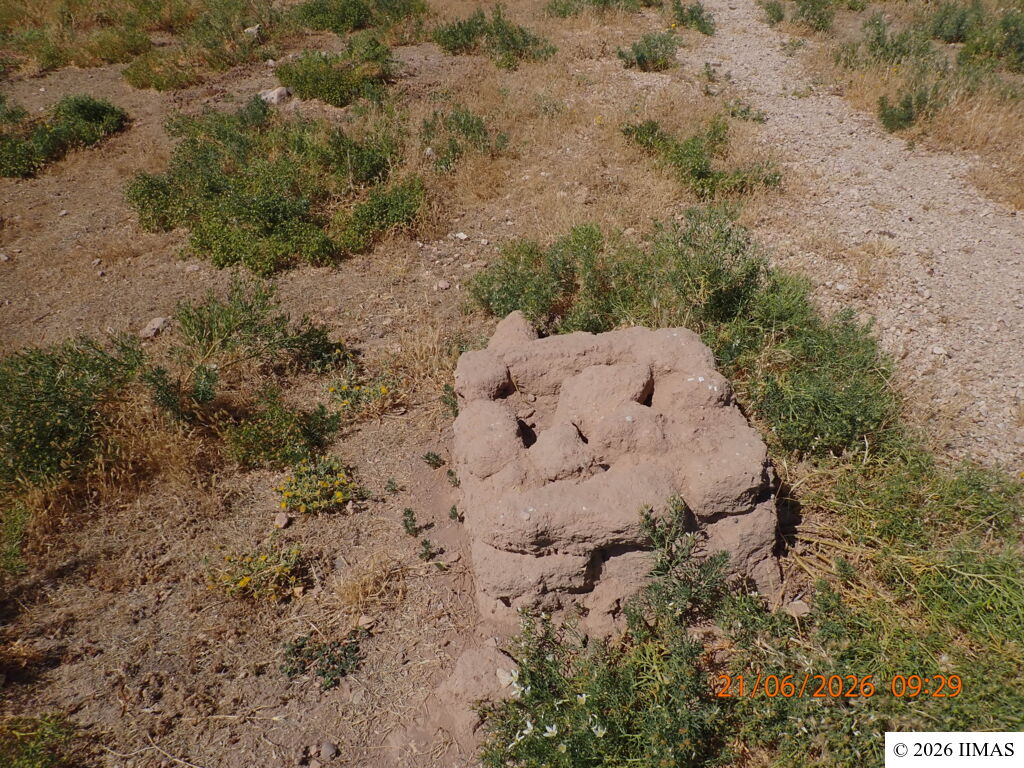
I previously constructed four mud-brick waste containers for visitors, three of them along the upper path near the temple and plaza, and one near the palace. Over time, however, they deteriorated and partially collapsed due to weather conditions and the absence of regular maintenance.
| |
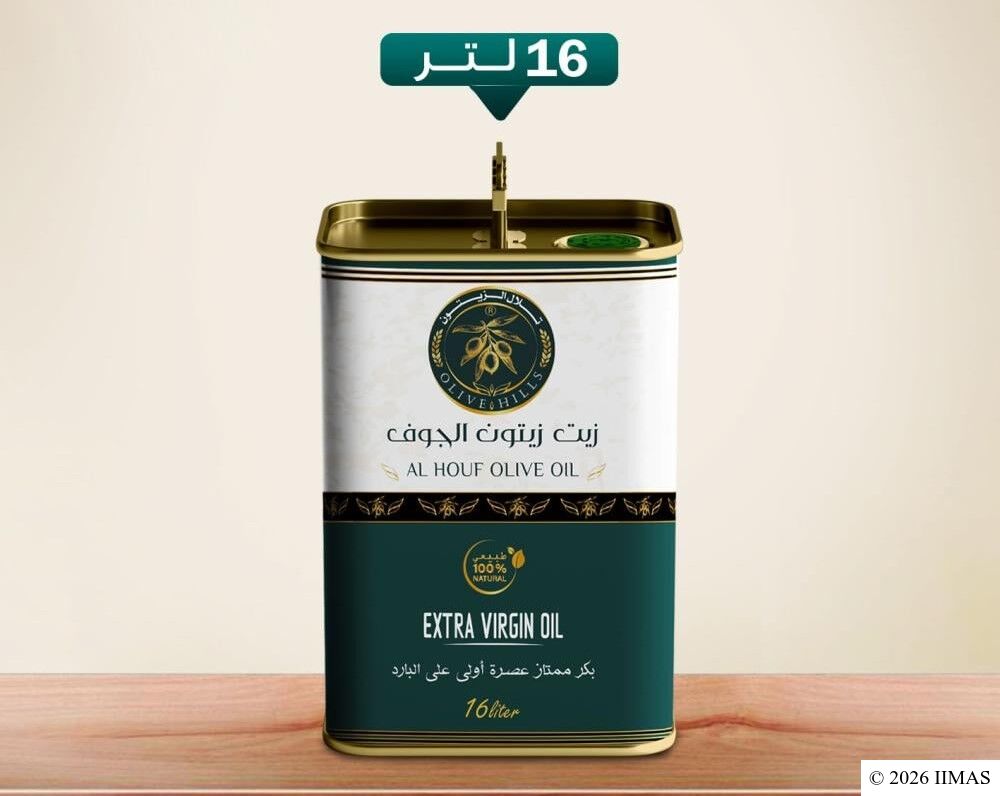
The current plan is to restore these containers by repairing the existing mud-brick structures and equipping them with metal cans of the type commonly used for food products or oils. Plastic containers were previously used inside the mud structures, but experience has shown that they are not suitable for the site’s climatic conditions, particularly high temperatures and exposure to rain.
|
|
I also plan to design and install small informational panels encouraging visitors to keep the site clean and dispose of waste in designated areas. We can agree later on the wording of these messages. I estimate that three small signs will be needed for this purpose.
Regarding construction materials, I would like to ask whether it would be possible to make use of the mud bricks currently stacked in front of the palace for the proposed restoration work.
| |
Back to top: Report on the Review of Panels and Visitor Paths at the Site
Required Materials and Estimated Costs
Panels
- Welcome panel: approximately $35.
- Panels with covers and with out new support (which includes more than two A4 pages): $17 per panel.
- Panels with cover and with new support (if needed): $22 per panel.
- Panels without covers (which includes one or two A4 pages): $10 per panel.
Three panels without cover may be required for awareness messages related to site cleanliness and proper waste disposal.
Based on current estimates, the project would require:
- Renewal of 7 Panels with covers.
- Creation of 3 Panels without covers.
- Creation of 1 welcome panel.
The estimated total cost for panel work is therefore approximately $184.
Visitor Paths
- Approximately 25 cement blocks may be required. At a cost of $0.65 per block, including transportation to the mound, the estimated total cost would be $16.25.
- If additional crushed stone is required, approximately 2 cubic meters may be needed. At $25 per cubic meter, including transportation, the estimated total cost would be $50.
Back to top: Report on the Review of Panels and Visitor Paths at the Site